
On This Page
- 9 min read
How Many Security Guards Do You Need for an Event in Houston?
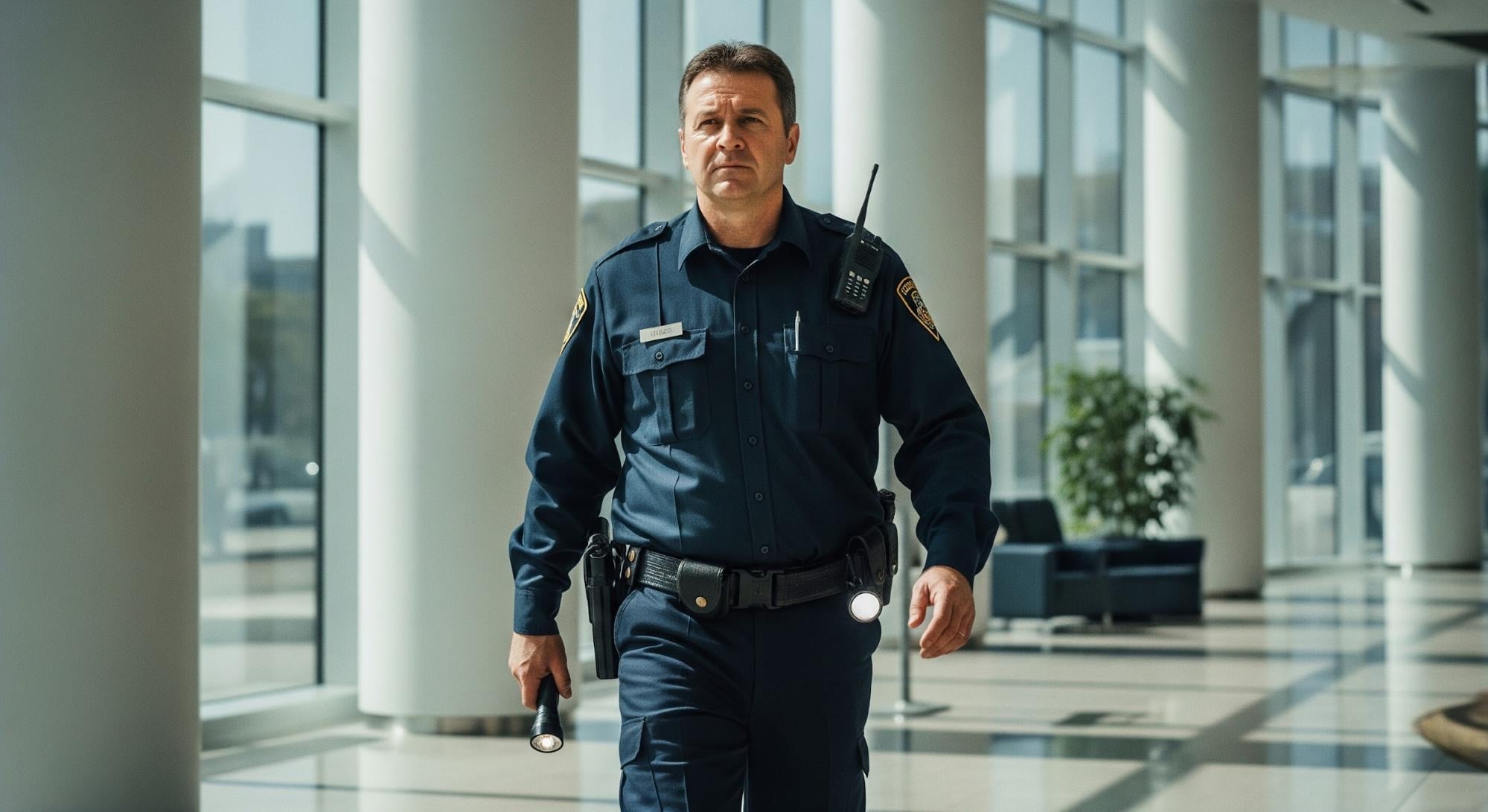
Houston Crowds Move Fast—Your Security Staffing Should Too
Wondering how many guards your Houston event really needs? Picture Discovery Green on a busy Saturday: bag-check tent snarled, stroller lane mixing with the VIP (very important person) queue. One cut, a shoulder bump, then a shove. Two extra guards—one dedicated line lead, one floating for quick de-escalation—would split queues, open a second bag table, and reroute families when a storm cell skirts the park. Flow continues. Tempers drop.
Now jump to NRG Park. Afternoon expo, scanners hiccup at Hall C, and the single bag-check lane balloons from 30 to 120 people. A jostle at the belt turns into a loud back-and-forth. With two more guards—one opening a third table, one roving the merge—lines segment, the credential fast lane holds, and the mood resets in seconds. Guests keep moving.
In a minute, we’ll share a simple Houston-specific framework to right-size staffing—before permits, vendors, and timelines lock in. You’re moving fast; we’ll give you the math and roles to decide today.
Why Getting the Number Right Matters in Houston
You want the math and roles—Houston’s landscape changes that math. From George R. Brown (GRB) Convention Center to Toyota Center, and sprawling outdoor footprints like Buffalo Bayou Park, our venues stretch teams across big distances. Add high-traffic districts—Downtown, EaDo (East Downtown), Midtown—and you get gridlock right when lines peak. Summer heat and pop-up storms force shorter posts, shade, and medical readiness. Those realities shape guard placement, reliefs, and communication.
So what does that mean for you? Single-door ratios break at multi-entry sites, escalators and loading docks create choke points, and parking garages need eyes during peak arrivals and release. When alcohol is served, ID checks and bar lines pull guards off floors unless you plan them in. Family crowds versus nightlife shifts call for different post types. Local context moves the number up or down.
Under or over-staffing shows up fast in Houston. Here’s what we see:
- Permit gaps with MOSE (Mayor’s Office of Special Events) risk insurance issues
- Multi-entry venues without enough screeners slow ingress and spike tension
- Thin coverage in lots and garages increases vehicle and bag theft
- Right-sized posts keep lines moving and reduce guest friction
- Visible presence near bars/merch deters disorder and protects sales
Generic headcount ratios ignore your layout, alcohol service, neighborhood, and parking patterns. That hidden math is what trips planners up.
The Hidden Math Behind Guard Counts—What Sabotages Houston Events?
We see the same mistakes across town: copying a “1 per 100” ratio from another city, miscounting gates at Discovery Green or GRB, and assuming volunteers can screen bags or de-escalate. Then egress and load-out get ignored, even though that’s when crowds surge and tempers spike. Good intentions, bad math.
The result? Lines stack at the wrong doors, VIP (very important person) arrivals collide with valet, and your floor loses coverage when a bartender calls for help. Incident response slows because no supervisor is dedicated to radio control. Meanwhile, unattended lots invite break-ins. Each gap compounds the next—until one small shove turns into a scene.
Here are Houston-specific errors that quietly inflate your risk:
- Using one-per-100 across a multi-block street festival footprint
- No dedicated post for VIP load-in at River Oaks/Heights
- Skipping roaming lot patrols for EaDo or Midtown night events
- No relief plan for 95°F heat and hydration rotations
- Understaffed ID checks when multiple bars serve TABC alcohol
Without a factor-based plan, you either overspend on the wrong posts or accept avoidable risk. Let’s map the drivers that actually change your number.
8 Factors That Change Your Guard Number in Houston
We use these eight levers to tune staffing up or down.
Factor 1: Event size & risk profile: Family daytime vs. nightlife/concert shifts ratios and requires different post types and supervisor span-of-control.
Factor 2: Venue layout & entries: Count all doors, gates, floors, docks, and choke points at GRB and Toyota Center.
Factor 3: Attendee profile: VIPs, minors, expected intoxication, and neighborhood demographics shape screening, rovers, and protection.
Factor 4: Alcohol/TABC (Texas Alcoholic Beverage Commission) service: Plan ID checks, over-service watch, last call support, and bar line management.
Factor 5: Cash/ticketing/merch: Secure point-of-sale, safe escorts to back-of-house, and closing counts.
Factor 6: Parking & perimeters: Lots, garages, rideshare, and street patterns Downtown/EaDo require rovers and traffic posts.
Factor 7: Season & weather: Heat index, shade, hydration, lightning plans, and shelter routes adjust staffing.
Factor 8: Local rules & permits: MOSE, Harris County Fire Marshal, and off-duty HPD (Houston Police Department) liaison.
Next, we turn these factors into a headcount and post plan you can use today.
Your Houston Guard Count Formula: Ratios by Risk Tier
Start with these ranges, then adjust using the checklist below for your venue, crowd, weather, and compliance.
| Risk tier | 1–50 | 51–250 | 251–1000 | 1001–5000 | Houston staffing notes |
|---|---|---|---|---|---|
| Low (daytime, seated, no alcohol) | 1 guard | 2–3 guards | 6–10 guards | 12–30 guards | Entrance unarmed + 1 rover; single-entry ideal |
| Standard (most corporate/weddings) | 2 guards | 4–6 guards | 10–18 guards | 20–50 guards | Bag checks at doors; add supervisor at 500+ |
| Elevated (music/nightlife/alcohol) | 2–3 guards | 6–8 guards | 14–24 guards | 30–70 guards | Dedicated entry/exit teams; quick-reaction pair |
| High (VIPs/cash/protest risk) | 3–4 guards | 8–12 guards | 20–32 guards | 40–90 guards | Consider armed + HPD liaison; buffer zones |
Now adjust the baseline with these site-specific steps:
Step 1: Count entries: Add 1 guard per active public door or gate beyond two.
Step 2: VIP/performers: Add 2–6 for VIP access points and loading docks.
Step 3: Alcohol/TABC: Add 2–4 for ID checks and bar lines; add 1 supervisor at 500+.
Step 4: Cash/merch/ticketing: Add 1–2 per cash point and include escort plan.
Step 5: Parking/perimeter: Add 2 rovers for lots/garages; more for multi-block footprints.
Step 6: Heat/weather plan: Add 1 floater per 300 attendees for reliefs in 90°F+.
Step 7: Emergency roles: Ensure 1 supervisor per 8–12 guards; assign medical and evacuation liaisons.
Example 1: River Oaks gala, 300 guests, alcohol and valet. Baseline (Standard): 10–18; we set 12 for a ballroom with two doors. Adjustments: +2 for ID/bar lines, +2 for valet/curb, +2 for VIP arrivals and dock, and +1 rover for floor flow. Final team: 17–19 with a dedicated supervisor.
Example 2: Discovery Green concert, 2,500 attendees, four entries, bars, merch, and two garages. Baseline (Elevated): 30–70; we set 40. Adjustments: +2 for extra entries, +6–8 for ID/bar lines, +3–4 for merch cash points and escorts, +6 for parking/egress rovers, supervisors at 1 per 10 (4 total). Final deployment: 55–62, depending on set times.
That headcount only works if the right guard types cover the right posts. Let’s map roles to features next.
Who Goes Where: Roles That Make Your Number Work
Use this quick matrix to translate event features into posts, guard types, and supervision.
| Event feature | Recommended guard types | Minimum posts | Houston notes |
|---|---|---|---|
| Alcohol/TABC service | Unarmed at bars + supervisor; add ID-check team | 2+ | TABC compliance and last call support |
| Multiple entries/exits | Door guards + rover team | = entrance count | Barricades and stanchions at busy gates |
| VIPs/celeb guests | Close protection (armed optional) + access control | 2–6 | Separate load-in/out at GRB/Toyota Center docks |
| Outdoor festival footprint | Bike/vehicle patrol + rovers | 2 patrols + rovers | Heat/hydration plan; shade tents for posts |
| Cash/ticketing/merch | Fixed post + supervisor oversight | 2–4 | Camera coverage; cash escorts to BOH (back-of-house) |
| Fire risk/high occupancy | Certified fire watch + supervisor | Per code | Coordinate with Harris County Fire Marshal |
Need deeper support? Our team handles planning, posts, and documentation end to end. Explore security guard services in Houston to see capabilities and specialty roles.
Now let’s see this play out in real Houston scenarios—counts, roles, and outcomes.
What It Looks Like in Houston: 3 Quick Wins
As promised, let’s play it out with three quick Houston snapshots—gala, outdoor concert, and trade show—showing how right-sized teams changed lines, safety, and egress in minutes.
- River Oaks Gala (300 guests): baseline standard, alcohol ID and VIP access posts; final 8–10 including supervisor; result: 6-minute average entry, zero disturbances.
- Discovery Green Concert (2,500 attendees): elevated tier with four gates, bars, merch, and garages; final 34–38 including bike patrols; result: quicker egress, balanced lines, reduced fence pressure during headliner and weather hold.
- GRB (George R. Brown) Trade Show (4,500 over two days): standard tier, multiple docks and cash sales; final 42 with 2 supervisors; result: booth thefts prevented, protected cash escorts, load-out with staged dock timing.
To keep these results, staffing must align with permits, fire code, and alcohol rules. Next, we’ll show the Houston compliance checklist so your plan matches city and venue requirements.
Permits, Fire Watch, and HPD: Houston Rules to Know
Staffing works on paper—now align it with Houston’s rules. Guidance only, not legal advice; verify with the City of Houston and Harris County.
Here’s the quick checklist we use with clients—who to coordinate with and what to prep so permits, fire code, and alcohol rules line up.
- MOSE (Mayor’s Office of Special Events): security plan with staffing, ingress/egress, barricades; confirm if your footprint triggers permits; start 30 days out for public spaces.
- Harris County Fire Marshal: occupancy limits, egress routes, fire watch staffing when systems are impaired; verify extinguisher count and exit signage with venue.
- HPD/off-duty liaison: determine if Houston Police Department presence is required for road closures, cash-heavy nights, or protest risk; coordinate through venue or city channels.
- TABC coordination: Texas Alcoholic Beverage Commission ID checks, over-service monitoring, and last-call procedures; align staffing for wristbands, bag checks, and bar lines.
- Insurance/COIs (certificates of insurance): list City/venue as additionally insured; confirm limits and dates cover setup, event, and teardown.
- Site map & post orders: label posts, radio channels, medical points, muster areas; include weather shelter, ADA (Americans with Disabilities Act) paths, and cash escort routes.
With approvals squared away, let’s build the day-of playbook—posts, radios, rotations, and weather actions—so lines move and incidents get handled fast.
Turn the Number Into Action: Your Houston Deployment Plan
With approvals squared away, here’s how we run your day—clean, calm, and fast—from call time to debrief, so lines move and incidents stay minor.
Step 1: Briefing & post orders: Distribute maps, radio call signs, and emergency roles; confirm zones, relief times, and escalation tree. One 10-minute huddle saves 60 minutes later.
Step 2: Staggered call times: Doors, bag-check, and rover teams arrive in waves. Screening first, then floor, then parking. Peak arrival covered without early-hour idle time.
Step 3: Perimeter sweep: Lots and garages first; coordinate with venue operations on access lanes, barricades, and rideshare. Early patrols cut break-ins and smooth vendor load-in.
Step 4: Entry operations: Bag checks, ID (identification) checks, VIP (very important person) lane, and ADA (Americans with Disabilities Act) access. Assign a line lead to balance queues.
Step 5: Rovers & patrols: Bike or vehicle patrols cover long footprints and hot spots; rovers check bars, merchandise, restrooms, and exits every 15–20 minutes.
Step 6: Supervisor cadence: 30–60 minute rounds with radio checks; digital logs capture incidents, refusals, and ejections. One supervisor per 8–12 guards keeps response tight.
Step 7: Heat/relief rotation: Add floaters on 90°F+ days; use hydration tents and shade. Rotate posts every 45–60 minutes; log wellness checks and cooling breaks.
Step 8: Egress & load-out: Stage at exits and docks; protect merchandise and cash escorts. Hold perimeters until vendors clear; reopen streets only after traffic flows.
When your team runs this playbook, finance and risk leaders relax—because coverage is clear. Ready to see costs and options? Let’s map Essential, Enhanced, and Premium.
Budgeting Smart: What You’re Paying For—and Preventing
You asked for costs and options—here’s how we frame Essential, Enhanced, and Premium without guesswork. Your total is driven by guard hours, risk tier, specialized roles, footprint size, and equipment like radios or screening lanes.
| Line item | What it covers | How it scales | Houston notes |
|---|---|---|---|
| Security Guards (unarmed) | Entrances, patrols, bag checks | By headcount, hours, and footprint size | Common base for most Houston events |
| Armed Guards (if required) | High-risk posts, VIP access, cash handling | By risk tier and scheduled hours | Coordinate with venue and insurer policies |
| Site Supervisor | Oversight, venue liaison, incident reports | One supervisor per 8–12 guards | Essential once attendance reaches 500+ |
| Patrol Vehicle/Bike Team | Large perimeters, faster response coverage | By acreage, blocks, or route length | Ideal for Discovery Green and street fairs |
| Screening Equipment | Wands, magnetometers, stanchions, barriers | By entry count and expected throughput | Plan lanes for families, VIP, ADA |
| Radios and Communications | Reliable team coordination and call discipline | By team size and post count | Signal coverage varies across Downtown venues |
| Fire Watch | Code-required life safety monitoring | By occupancy, hazards, or impaired systems | Coordinate with Houston Fire Marshal |
| Permits, Police, and Contingency | MOSE, HPD, emergency buffer funds | By event risk, scope, and hours | Plan early to avoid rush or closure fees |
Security spend returns in three ways: shrink prevention, smoother operations, and happier guests. Fewer thefts at merch and parking lots protect revenue you’ve already earned. Shorter lines and faster egress keep programs on schedule, which sponsors love. Better reviews and repeat attendance follow stable, visible coverage—one avoidable incident can cost far more than adding two posts.
For corporate and campus planners, our commercial security services in Houston, TX extend beyond events—lobbies, garages, and campuses—so your playbook stays consistent from weekday operations to weekend activations.
Now that the costs make sense, here’s how we build, staff, and supervise the plan in Houston so coverage holds when it matters.
Why Houston Organizers Choose City Security Services
We start with a tailored assessment: walk the venue, map entries, and model peak flows. Then we translate that into posts, rotations, and clear post orders you can share with vendors. Our in-house training focuses on de-escalation, bag screening, radio discipline, and TABC (Texas Alcoholic Beverage Commission) alignment. To keep coverage tight, we use GPS check-ins (location-verified clock-ins) and digital shift reports that log incidents in real time. It’s practical, Houston-native planning backed by accountability you can audit.
We know the logistics at Discovery Green, GRB (George R. Brown) Convention Center, downtown hotels, and neighborhood sites from the Heights to Pearland. That local context shapes our advice on valet, rideshare zones, and egress routes. Supervisors maintain geofenced patrols (GPS-based zones) and standardized call signs, so handoffs are clean between shifts. Need fire watch or HPD (Houston Police Department) coordination? We handle it, and we align documentation for MOSE (Mayor’s Office of Special Events) and the Fire Marshal. The result is predictable coverage and fewer surprises.
Next, we’ll finalize your staffing matrix, site map, and post orders—clear, compare-ready, and tailored to your Houston venue.
Get Your Houston Event Security Staffing Plan
Ready to finalize your staffing matrix, site map, and post orders? We’ll review your venue, tier your risk, count entries, and map posts and shifts—with Houston-specific compliance notes baked in. Most plans are turned around within 24 hours. Local team, on-call 24/7. No obligation—just a clear, compare-ready plan you can send to your venue and vendors.
- You get: Baseline + adjusted headcount tailored to your venue, program flow, and risk tier.
- You get: Post map & rotation plan for entries, rovers, VIP access, parking, and egress.
- You get: Compliance checklist aligned with MOSE (Mayor’s Office of Special Events), Fire Marshal, and TABC rules.
- You get: Incident-ready communications (comms) plan with radio channels, plain-language codes, and reporting cadence.
- You get: Budget-friendly options for Essential, Enhanced, Premium tiers and needed equipment.
Houston Event Security FAQs
What’s a safe guard-to-guest ratio in Houston?
Before you tap Request my Houston staffing plan, use this rule: start at 1 guard per 75–100 guests, then apply risk multipliers. Alcohol, multiple entrances, and parking/traffic usually move the number more than raw headcount. Example: a 400-person gala with alcohol, two doors, and valet typically lands 10–14 guards including a supervisor. Flip it to a daytime, no-alcohol lecture with one entrance and you’re closer to 4–6.
Do I need armed guards or police in Texas?
Most events run well with trained unarmed guards. We recommend armed coverage for elevated risks—VIP detail, large cash handling, or credible threats—and only at specific posts. Off-duty HPD (Houston Police Department) may be required for street closures, protest risk, or liquor-heavy nightlife zones per venue policy. Always align with MOSE (Mayor’s Office of Special Events) and TABC (Texas Alcoholic Beverage Commission) rules. We’ll confirm venue requirements, then propose the lightest mix that still meets safety and compliance.
How early should I plan and apply for permits?
For private venues, start security planning 3–4 weeks out; earlier is better. Public-space events or anything impacting streets/sidewalks should begin 30–60 days ahead. Multi-day festivals or street closures often need 60–90. Loop in the Fire Marshal early for occupancy and any fire watch, and coordinate TABC (Texas Alcoholic Beverage Commission) if alcohol is served. We’ll map deadlines and handle submissions the venue or city requests.
Can volunteers replace trained guards?
Volunteers are great for wayfinding, check-in hospitality, water stations, and vendor support. Licensed guards handle bag screening, access control, ejections, cash escorts, incident reporting, and any fire watch (life-safety monitoring when systems are impaired). A simple split works: volunteers welcome and direct; guards manage doors, bars, and back-of-house. That keeps liability low and lines moving.
What about heat, storms, or hurricanes?
We set heat index thresholds with 45–60 minute post rotations, hydration and shade at posts, and wellness checks. For lightning, we follow venue policy—typically pause when strikes are detected within 8–10 miles and resume 30 minutes after the last strike. Storm plans include shelter-in-place vs. evacuate triggers, clear PA scripts, and protected access lanes for EMS.
Can you staff last-minute or multi-venue?
Yes. We maintain surge capacity for rush bookings and can coordinate across multiple Houston sites with one supervisor per location and a central command lead. We use shared radio channels, plain-language protocols, and a common incident log so teams stay synced. Example: two downtown hotels plus Discovery Green on the same night—staggered call times, pooled floaters, and unified egress timing.
About City Security Services
That kind of multi-venue coordination is exactly what our Houston team was built for. For over six years, we’ve delivered tailored security across events, schools, hospitality, and commercial properties. We start with a walk-through and a risk-based staffing plan you can share with your venue. Our in-house training covers de-escalation, entry screening, radio discipline, and weather actions, so guards arrive ready. We operate 24/7 with supervisor oversight and, for most events, a draft plan within 24 hours.
We know the city’s venues and traffic patterns—from downtown hotels and the GRB (George R. Brown) Convention Center to community parks like Discovery Green. That local context helps us set the right posts at entries, docks, and parking—so arrivals feel smooth and egress stays controlled. You’ll get clear post orders, a zone map, and a plain-language communications plan, plus incident documentation and an after-action summary. We coordinate with your venue, AV (audio-visual), valet, and medical teams, then adjust in real time from a single command post.
Ready when you are—request your Houston staffing plan now and we’ll map your posts within 24 hours.
Get Expert Help
Let's discuss your test plan